A simple place to start
Where to start: The first five changes we'd make
Not sure where to start with reducing everyday chemical exposure at home? These are the five changes we’d prioritise first — some completely free, others simple swaps when it’s time to replace something.
On this page
Are you looking to reduce plastics, PFAS and other unnecessary chemicals around your home, but not sure where to start? With so much conflicting advice, it can be hard to know what actually matters — and what’s simply not worth worrying about.
We’ve cut through the noise and picked five practical places to begin, focusing on changes that are easy to make and genuinely worthwhile.
Quick answer
You don’t need to overhaul your home. Start with the things you use most often and the easiest changes to make. Some cost nothing; others can wait until something needs replacing. Cookware, food storage, chopping boards, drinking water and indoor air are the five places we’d start.
1.
Rethink worn non-stick cookware
If your non-stick pans are scratched, peeling or simply ready for replacement, this is one of the first swaps we’d make.
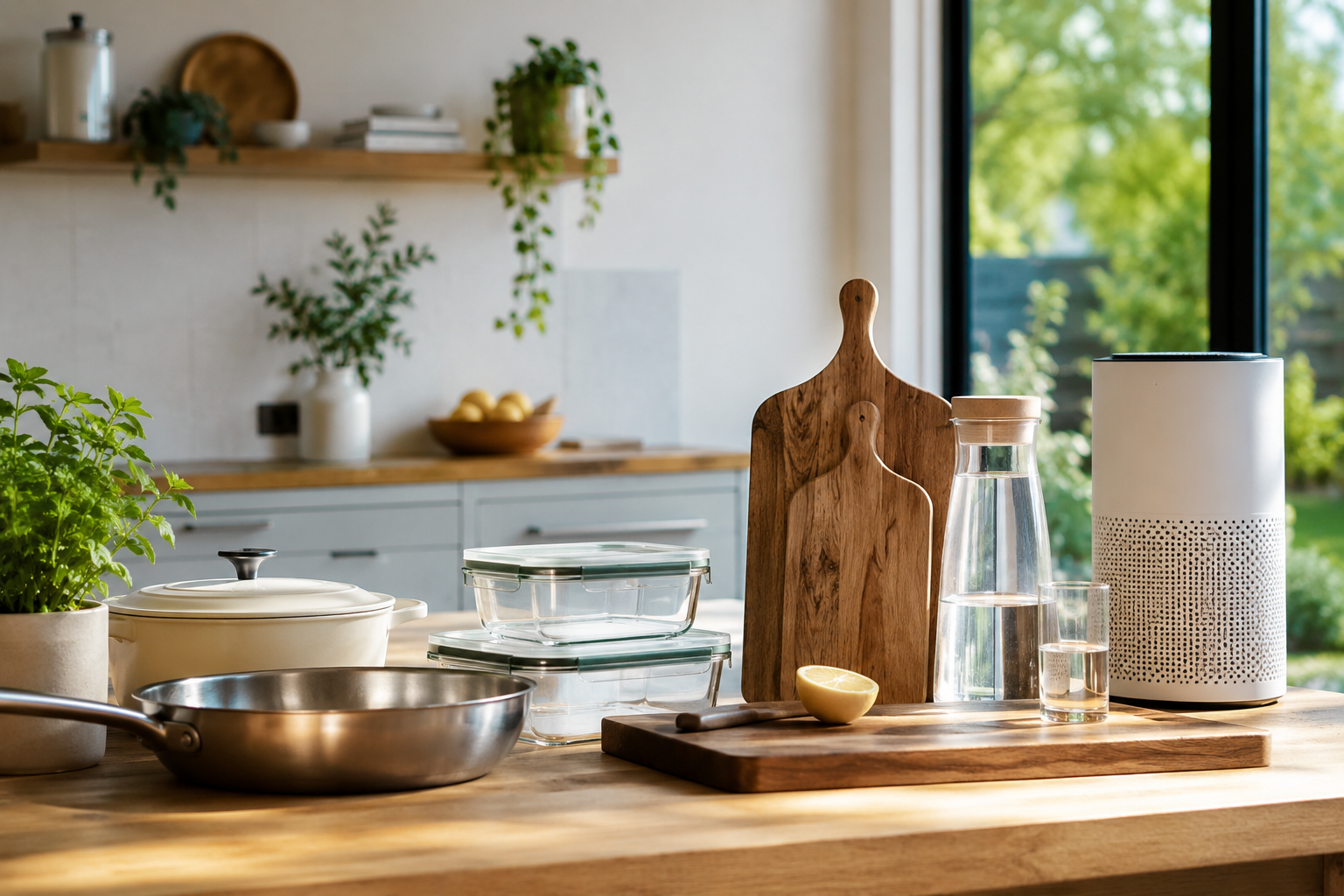
Many traditional non-stick coatings are made using PTFE, a type of PFAS. Consider replacing with a durable uncoated option such as stainless steel, cast iron or carbon steel. They can take a little getting used to, but a good pan can last for years.
2.
Move from plastic to glass food storage
If you regularly store food in plastic containers, this is one of the simplest swaps we’d make. Plastics can release chemicals into food, and migration can increase with factors such as heat, the type of food and the condition of the container.
Our preference is glass for everyday food storage. It doesn’t need to be expensive, lasts for years and removes much of the uncertainty around which plastics to use for which foods.
3.
Ditch the plastic chopping board
Every time you chop on a plastic board, your knife cuts into the surface. Research has found that plastic chopping boards can be a source of microplastics in food, particularly as they become scratched and worn.
Our advice is simple: swap your plastic chopping board for a wooden one. A good wooden board avoids cutting directly onto plastic, is durable and can last for years with basic care.
Quick answer
This isn't one we'd wait for something to wear out. If you have a plastic chopping board, replacing it with wood is a simple, relatively inexpensive swap we'd make now.
4.
Open your windows every day
Everyday activities such as cooking, cleaning and showering can add moisture, particles and pollutants to indoor air. Products and furnishings can also release VOCs. Regular ventilation helps move stale indoor air out and bring fresh air in.
Open windows on opposite sides of your home when you can to create a through-draught. Even a short burst of ventilation can help — particularly after cooking, showering, cleaning or using fragranced products.
Quick answer
Make opening the windows part of your daily routine. It’s free, takes seconds and is one of the easiest changes on this list.
5.
Rethink how you drink your water
Tap water in the UK is tightly regulated, but that doesn’t mean it contains nothing beyond water. Depending on where you live, it can contain substances such as chlorine, metals and PFAS at low levels, alongside minerals that occur naturally.
You don’t need to panic about your tap water. But if reducing unnecessary chemical exposure is your goal, filtering the water you drink most often is a reasonable step — and it can be as simple as using a good filter jug.
If you already filter your water, remember that changing the filter on schedule matters. An overdue cartridge isn't doing the job it was designed to do.
Start small — you don’t need to change everything at once
Reducing unnecessary chemical exposure at home doesn’t have to mean an expensive overhaul. Start with the easy wins, make the free changes now, and replace other things thoughtfully as they wear out.
If you only make one change today, that’s still a good start. Over time, a few sensible swaps can add up to a home with less unnecessary plastic, fewer synthetic coatings and better indoor air — without spending a fortune.
KindCasa’s approach is simple: know what matters, change what’s worthwhile, and don’t worry about the rest.